
The workspace for the work, the people, and the machines.
Hearth keeps tasks, documents, time, a sales CRM, assets, and work orders in one place. It is free to host yourself, with single sign-on and the audit log included, and EmberNet runs it for you when you would rather not.
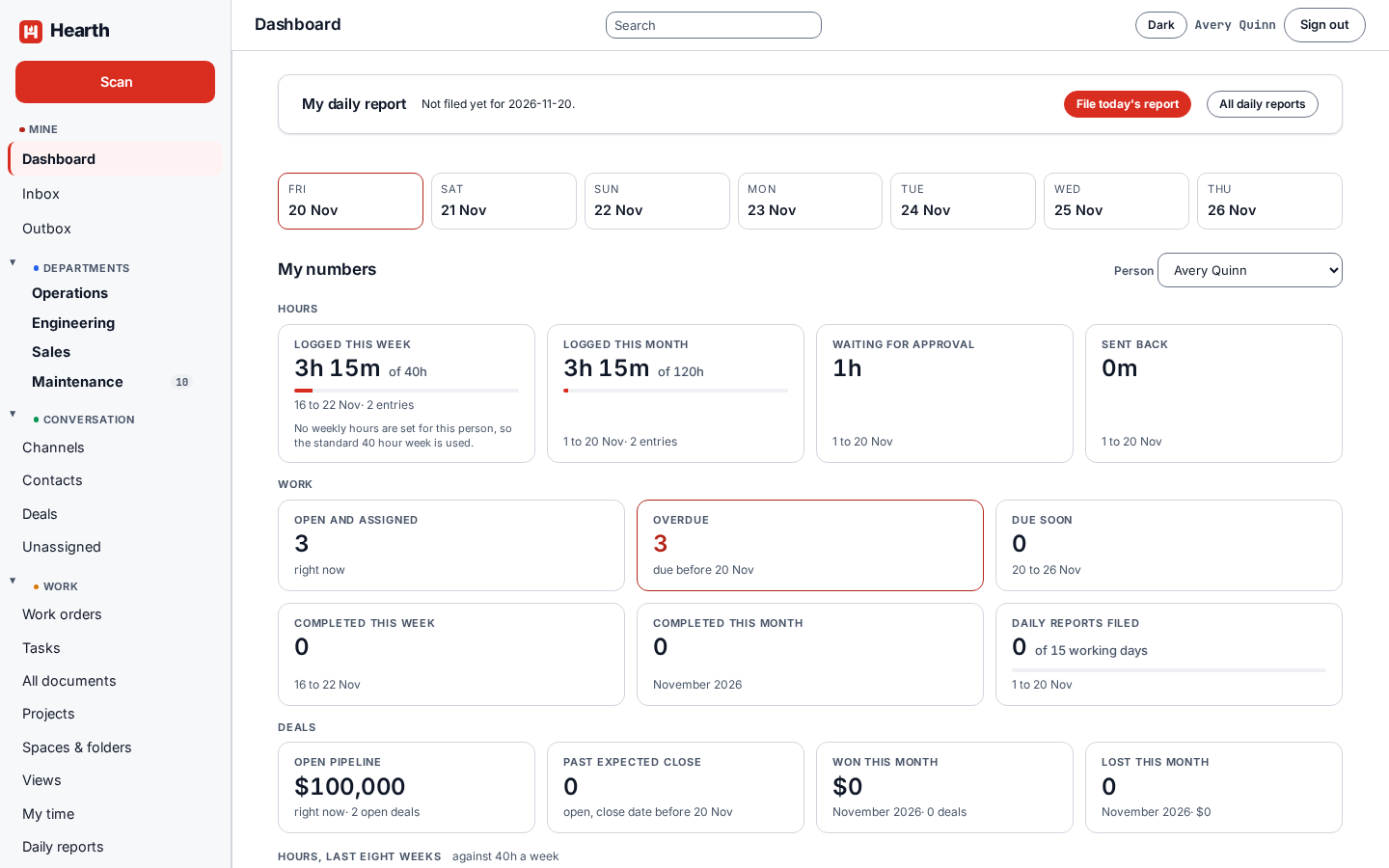
Free means all of it.
Hearth is released under the AGPLv3. There is one tier. Single sign-on is not a premium feature here, and neither is the audit log. Nobody, including us, can move a security control behind a paywall later, because the license says the source stays open to everyone who uses it over a network.
No seats to count
Hearth is free, so adding the fifth person or the fiftieth costs nothing extra.
No hosting lock-in
Run it on your own cluster or one Linux box, or on EmberNet. Your data is plain Postgres and S3 storage, so it moves with you.
Read the code
The full source, the container image, and the Helm chart are public. What you run is what we run.
Everything a working team reaches for.
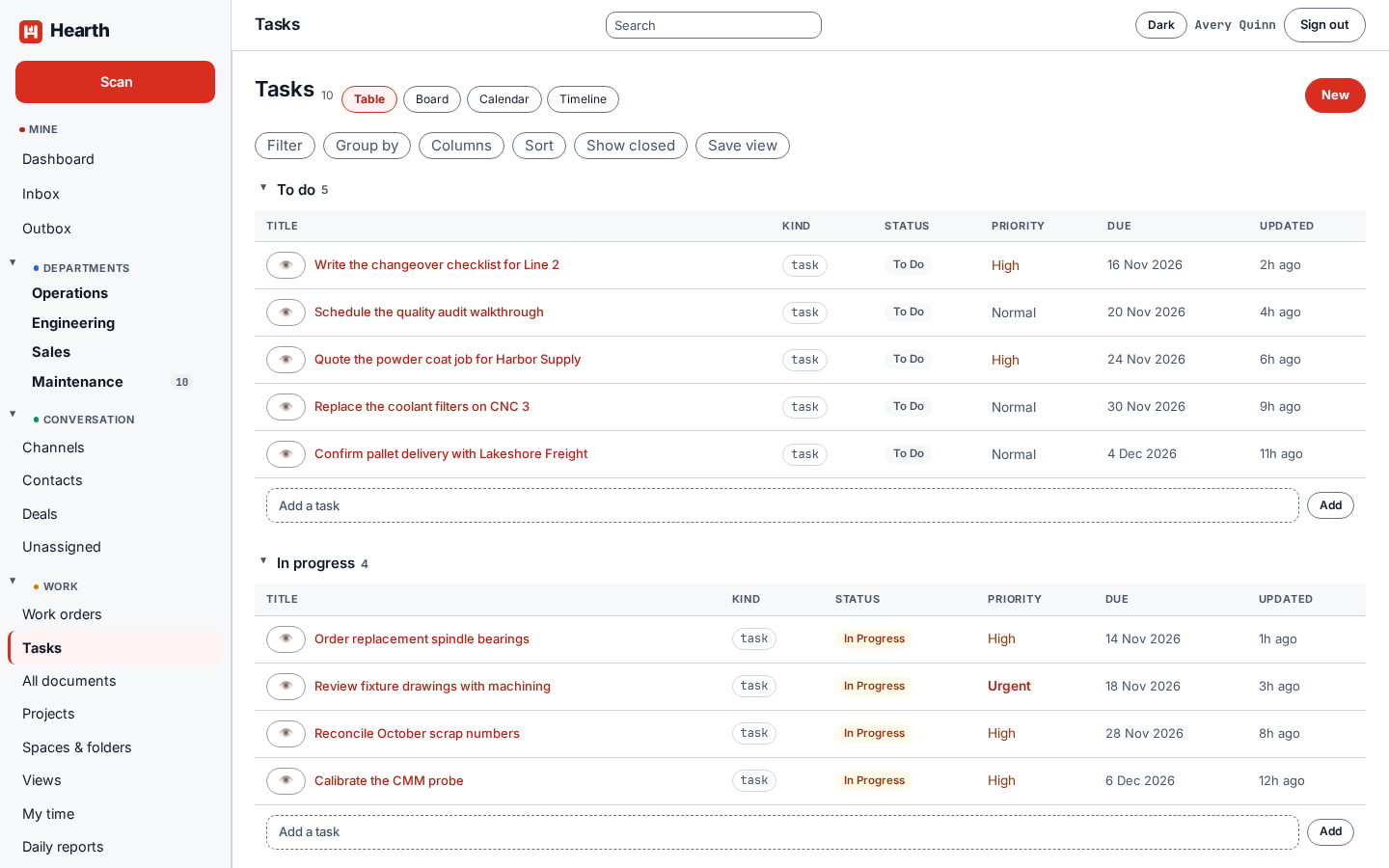
Tasks that fit how you work
Table, board, calendar, and timeline views of the same work. Subtasks, checklists, comments, attachments, and saved views.
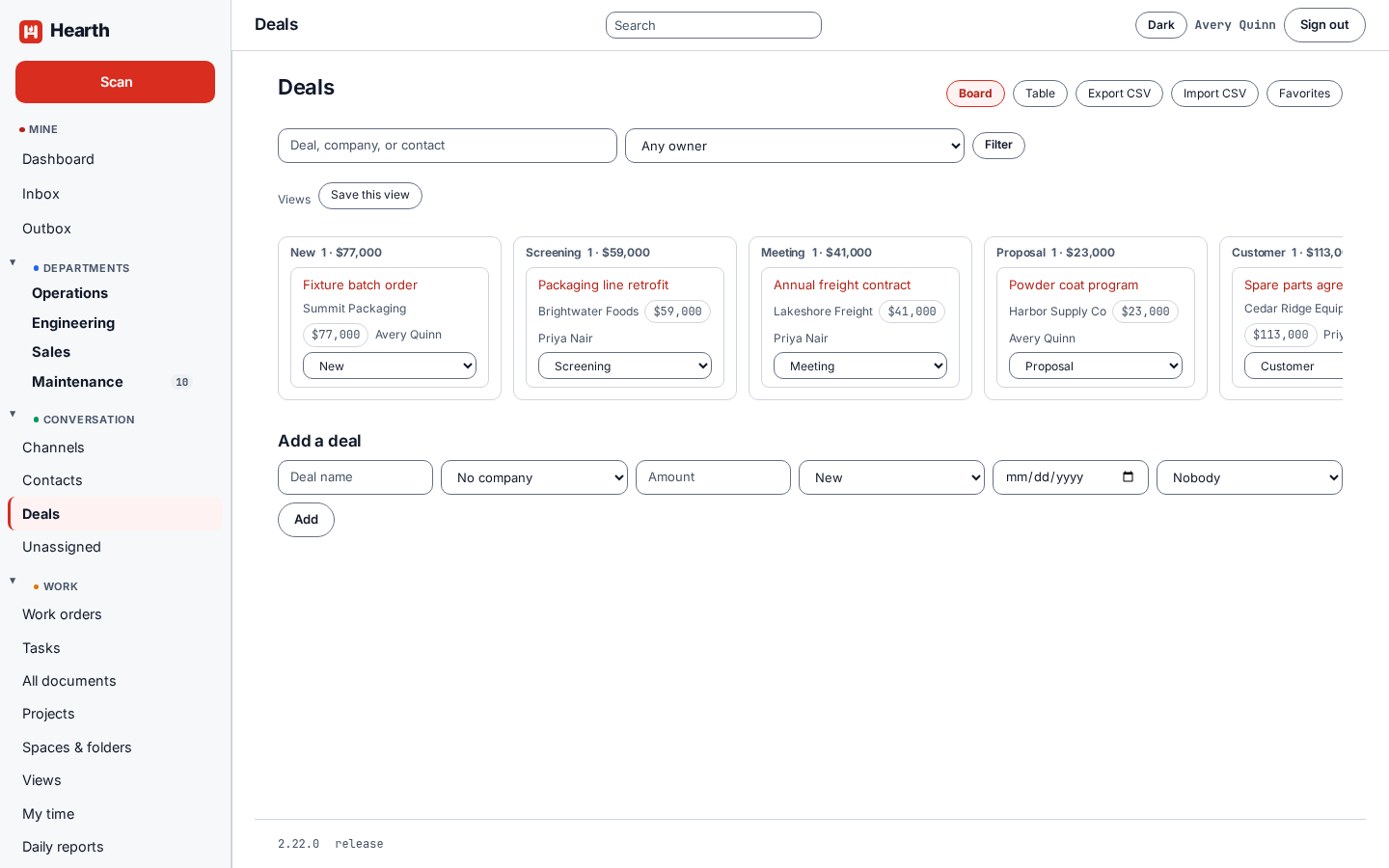
A CRM next to the work
Companies, contacts, and a deals board with a column for every stage. Log a call once and it shows on the contact, the company, and the deal.
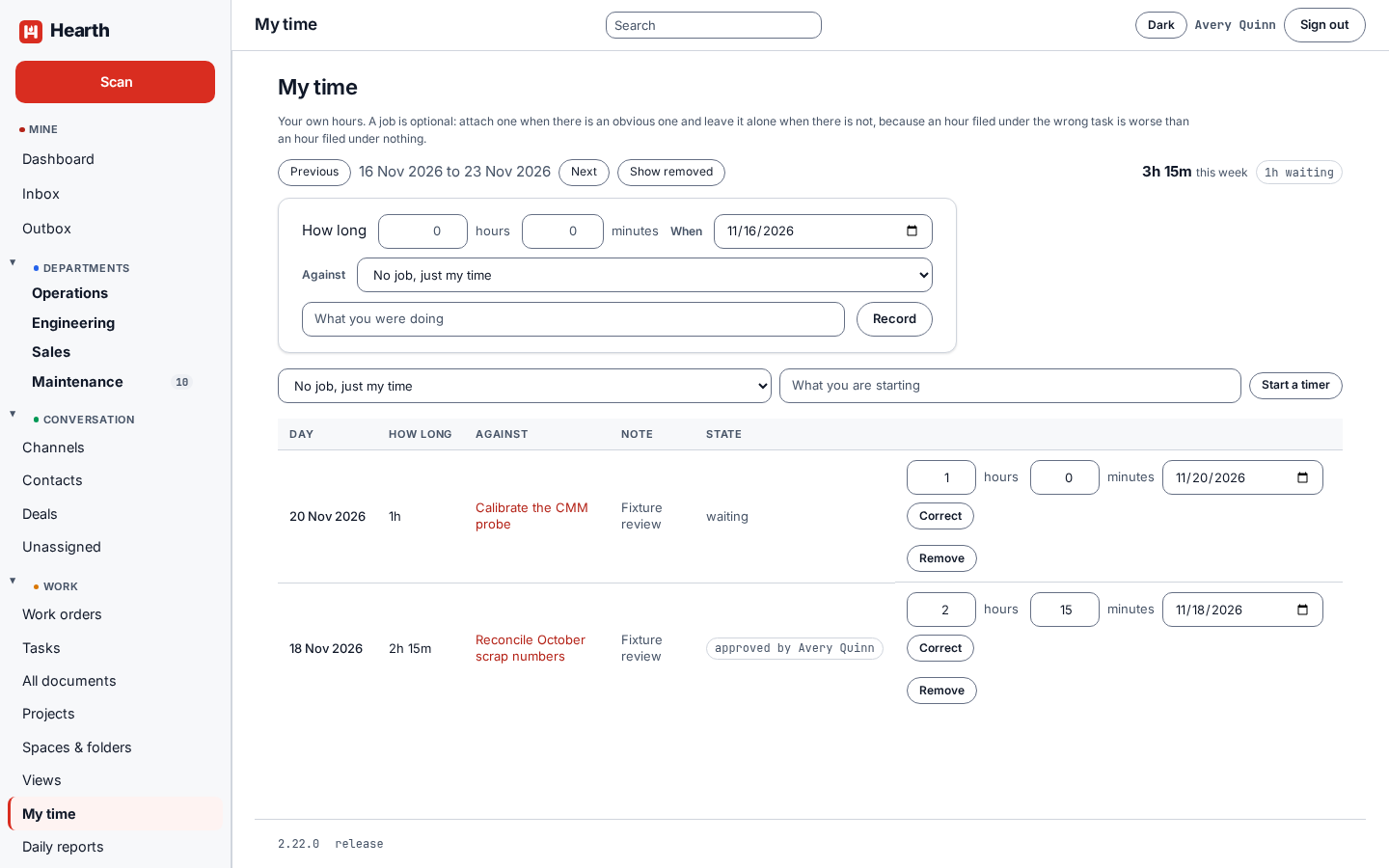
Time, approvals, and reports
Timers and manual entries, approvals by department, time off an approver can change or cancel, daily reports, and time reports you can download as CSV or Excel.
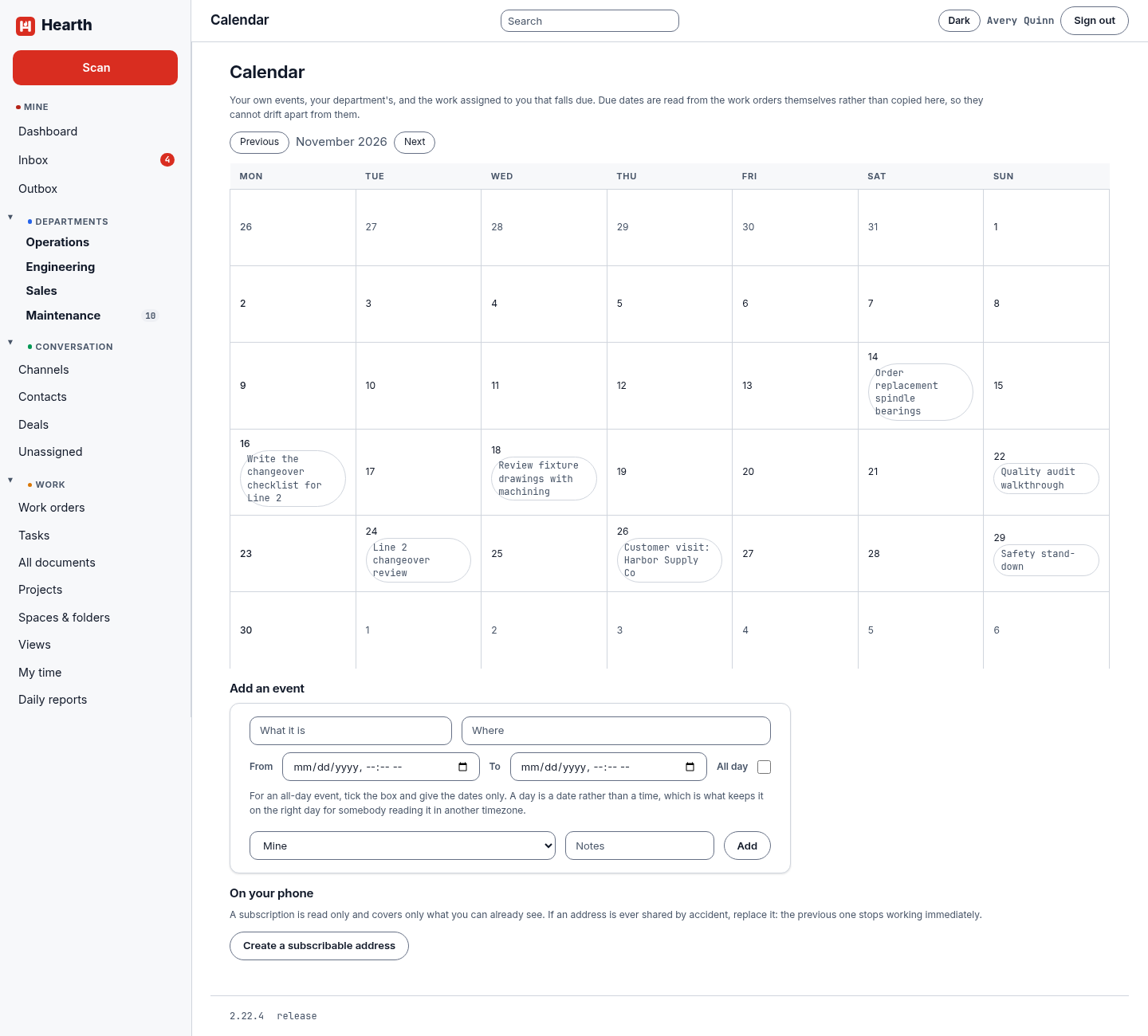
One calendar for the team
Your events, your department's, the work that falls due, and who is out, in one month view. Subscribe from your phone, read only.
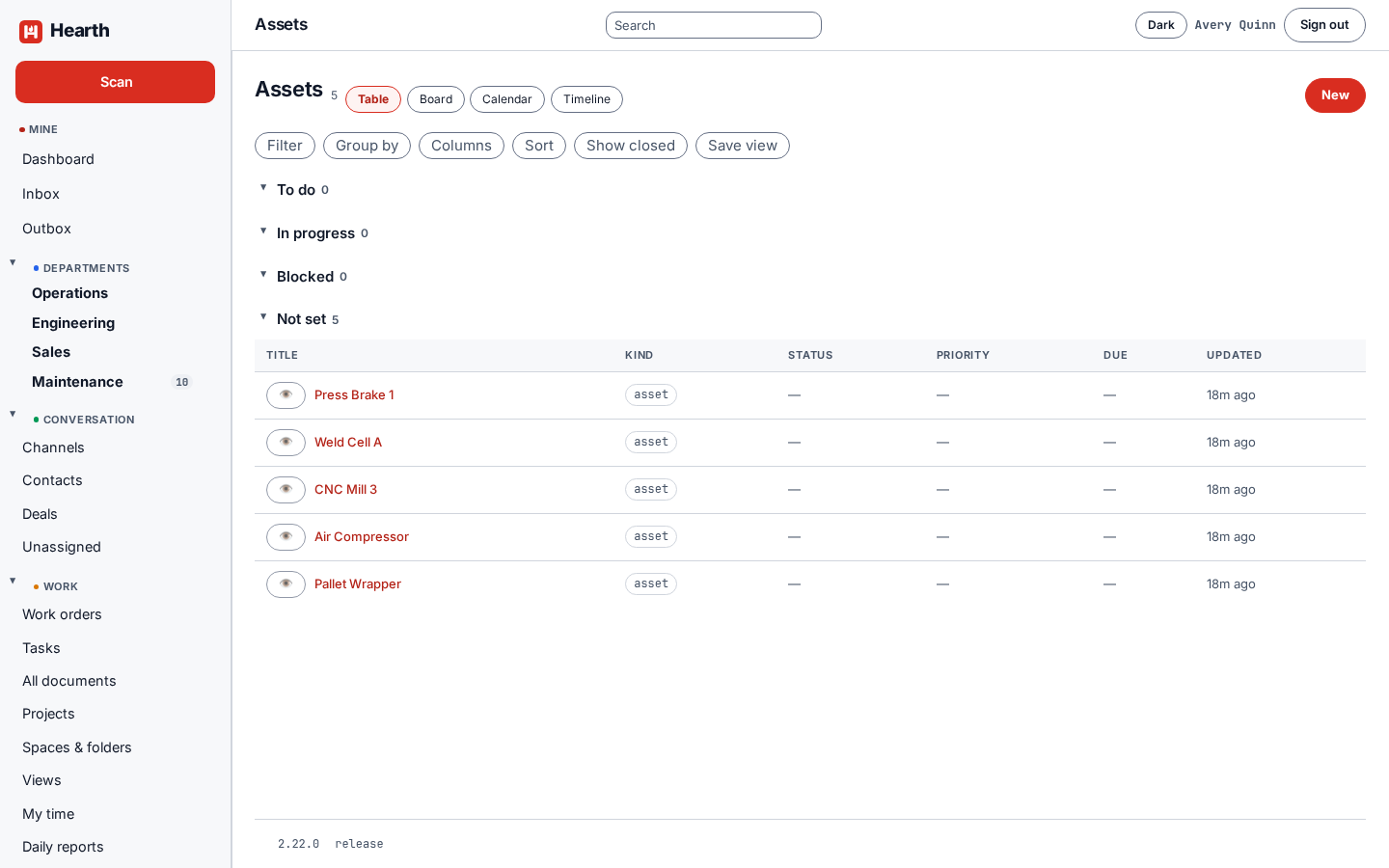
Assets and work orders
An asset tree, work orders against assets, downtime and availability, and preventive maintenance schedules that raise the work for you.
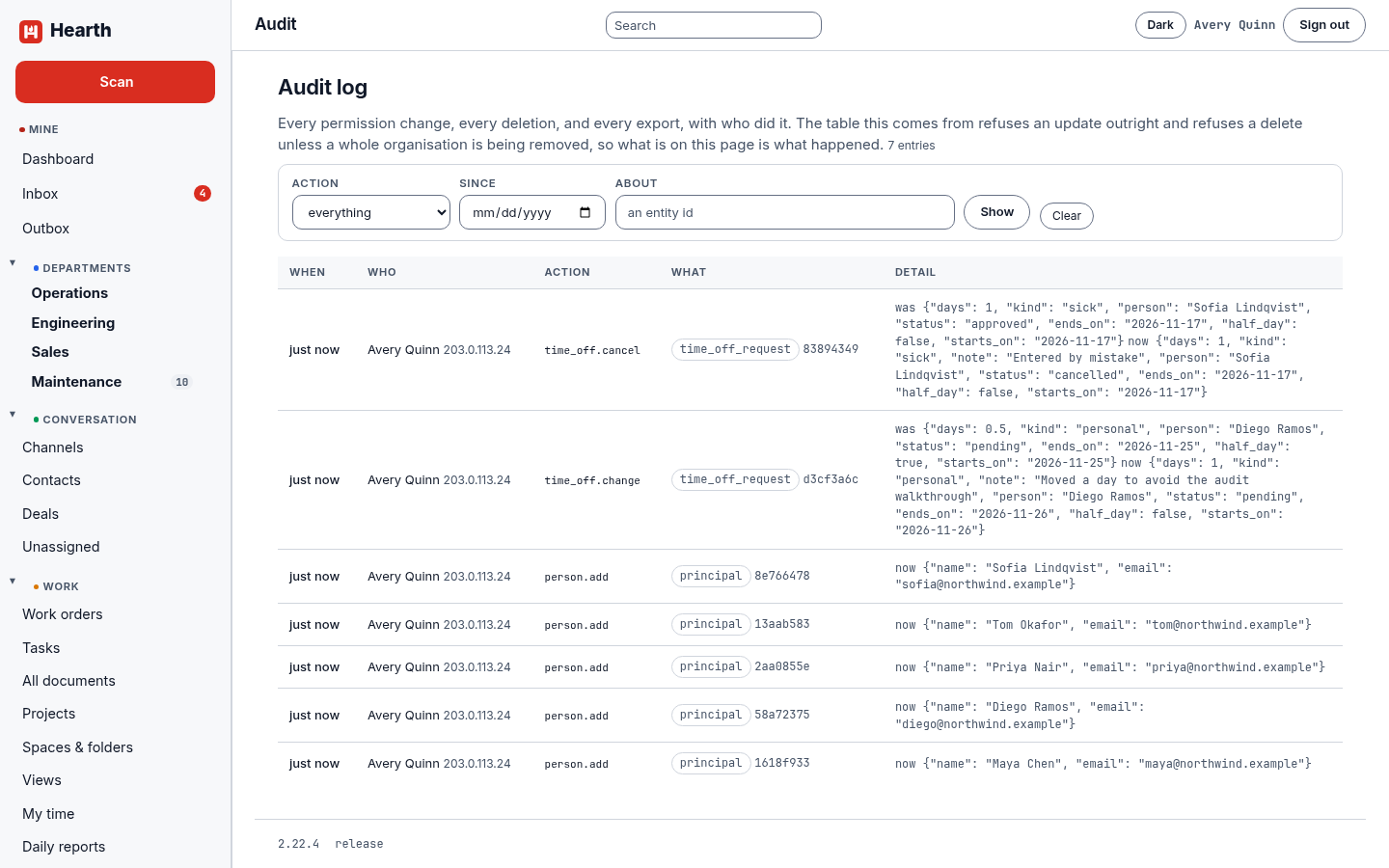
People, teams, and an audit log
Give each person the departments and admin rights they need and nothing else. Every permission change, deletion, and export is recorded, including who changed someone's time off and why.
Departments and permissions
Work is filed in departments with folders and projects inside. People can belong to several, and everyone sees what they have been given and nothing else.
Documents and templates
Documents, wikis, notes, and templates with an editor for checklists, links, and video. Search returns only what you may see.
Sign in with your own provider
Any OpenID Connect provider works, including Vord, Authentik, Authelia, Zitadel, Google, and Microsoft. Single sign-on is included, and so is the audit log.
Connect your assistant
Hearth has an assistant connector. Your assistant reads and writes Hearth as you, with exactly your permissions.
Works on a phone
Install it to your home screen, get a ring when work is assigned to you, file a daily report with a photo from the camera, and keep working when the signal drops.
Connects to your other tools
Keep customers and suppliers in step with EmberOps, send contacts to Mautic and honor every unsubscribe, bring in changes from HubSpot, and keep Google Workspace groups matched to your teams.
Rules that do the routine work
When a status changes or someone is assigned, set a field, assign a person, add a comment, create a linked item, notify someone, or call a webhook. Rules start switched off so you can try them first.
Your data, your storage
Postgres for records and any S3 storage for files. Backups, verified archives, and a restore you can rehearse come with it. Import from Jira, Asana, Monday, Trello, or CSV, and export everything as CSV or JSON.
Built by an engineer, for teams that make and fix things.
Hearth began on a plant floor, so the machine and the work on the machine are part of the same system as the quote, the invoice, and the hours. It suits shops, plants, maintenance crews, integrators, and any small team that wants one place for its own work.
Two ways in.
Run it on EmberNet
The easy path. Deploy Hearth from the App Store in EmberCORE and sign in. EmberNet operates the platform underneath it.
Host it yourself
Kubernetes with the public Helm chart, or one Linux box with Podman Quadlet. Bring your own Postgres, S3 storage, and sign-in provider, or let the chart run them.
Before you start.
Is Hearth really free?
Yes. It is released under the AGPLv3. There is one tier, single sign-on and the audit log are in it, and there is no paid edition to move up to.
What does it cost to run?
Hosting it yourself costs whatever your own server costs. Running it on EmberNet is the easy path, with the platform operated for you.
What do I need to host it myself?
Kubernetes with Helm, or one Linux box with Podman. Postgres 17 and any S3 storage. The chart can run both for you, or you can point it at yours. Hearth does not support Docker.
Give your team one place to work.
Start on EmberNet in minutes, or take the chart and run it on your own hardware today.